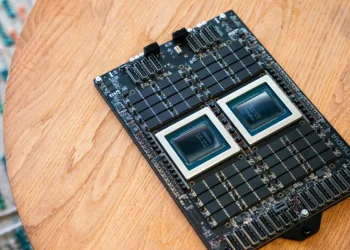
A rising ASIC coalition of tech giants, including Google, AWS, and Microsoft, is accelerating application-specific integrated circuit (ASIC) development to reduce dependence on Nvidia, according to a June 6, 2025, Tom’s Hardware report. With ASIC shipments projected to grow at a 50% CAGR, this shift threatens Nvidia’s AI hardware dominance. Here’s the story behind the move.
Why the Shift to ASICs?
Nvidia’s Blackwell GPUs, like the B200, cost $70,000-$80,000 each, with GB200 server configs ranging from $1.8M to $3M, per Tom’s Hardware. These prices push hyperscalers to develop cost-effective, tailored ASICs. Unlike Nvidia’s universal GPUs, ASICs optimize specific AI workloads, offering 10x better efficiency, per Groq’s claims. However, Nvidia’s CUDA software and 90% GPU market share create a high barrier, forcing a gradual transition.
The Coalition’s Strategy
Hyperscalers are dual-tracking: ordering Nvidia hardware while reserving TSMC production for in-house ASICs. Amazon’s Graviton Arm-based chips power 50% of its new servers, showing custom silicon’s rise. Google’s TPU and Microsoft’s Maia chips, developed with Taiwanese ASIC firms, highlight this trend. Nvidia counters with NVLink Fusion, partnering with MediaTek, Qualcomm, and Marvell to integrate its tech into third-party ASICs, maintaining influence.
TSMC: The Real Winner
TSMC, fabricating both Nvidia’s GPUs and the coalition’s ASICs, profits regardless. Chairman C.C. Wei stated, “Both Nvidia and ASIC players are our customers,” per Tom’s Hardware. TSMC’s dominance in chip manufacturing ensures it thrives amid this rivalries
Why It Matters
The ASIC push could fracture Nvidia’s $63B AI revenue stronghold, per BusinessKorea. X posts, like @StockSavvyShay, emphasize Nvidia’s NVLink strategy to retain control, while @RihardJarc notes Microsoft’s continued GPU reliance. If successful, the coalition could lower AI compute costs, democratizing access. However, Nvidia’s software moat and partnerships may delay this shift.