Meta $3 Trillion is quickly becoming a serious talking point among investors watching the artificial intelligence boom. While Nvidia, Apple, and Alphabet currently dominate the $3 trillion club, Meta Platforms could be next if its AI-driven transformation continues at pace.
Today, Meta is valued at roughly $1.6 trillion. However, strong AI integration across its advertising ecosystem could significantly expand profit margins and investor perception over the next few years.
How Meta $3 Trillion could become reality
The Meta $3 Trillion narrative centers on how the company is deploying artificial intelligence across its core advertising business. At the heart of this strategy is Advantage+, a machine learning tool that automates ad creation, targeting, and budget allocation.
Advantage+ helps advertisers identify which creatives perform best across Facebook, Instagram, and WhatsApp. By using AI to refine targeting and optimize placements, marketers can improve return on ad spend. That efficiency translates into higher revenue potential for Meta.
Recent updates show impressive traction. Advantage+ has reportedly reached a $60 billion annual revenue run rate. Meanwhile, Meta’s AI-powered video generation tools have hit a $10 billion annual run rate. Growth in this segment has outpaced overall advertising revenue expansion by a wide margin.
Additionally, Meta’s new attribution tools are driving meaningful increases in conversion rates. These AI-powered systems improve measurement accuracy, giving advertisers better insight into campaign performance.
Why investors question the Meta $3 Trillion path
Despite strong AI momentum, skepticism remains. The main concern is capital expenditure.
Meta spent heavily on infrastructure to support its AI ambitions. Capital expenditures jumped sharply in recent years and could continue rising as the company builds out data centers and computing capacity.
Some investors worry that rising AI infrastructure costs could pressure free cash flow in the short term. As a result, Meta currently trades at a forward price-to-earnings ratio that reflects caution rather than aggressive optimism.
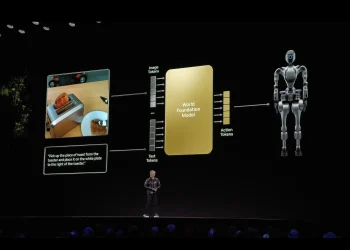
Compared to other hyperscalers, Meta still trades at a relative discount. Nvidia commands a premium due to its dominance in AI hardware. Apple benefits from predictable cash flows and ecosystem strength. Alphabet enjoys strong AI credibility tied to search and cloud.
Meta, by contrast, is still widely viewed as an advertising platform rather than a full-scale AI powerhouse. That perception gap is key to the Meta $3 Trillion debate.
Earnings growth could unlock Meta $3 Trillion
For Meta $3 Trillion to materialize, valuation expansion must accompany earnings growth. Analysts project steady earnings per share growth over the next few years, supported by improving ad efficiency and higher monetization per user.
If AI-driven products significantly improve unit economics, profit margins could expand. That shift would make Meta look less like a traditional social media business and more like a high-margin AI services platform.
Should that narrative take hold, investors may begin valuing Meta closer to other AI leaders. Even a moderate multiple expansion, combined with double-digit earnings growth, could push the company toward the $3 trillion threshold.
AI perception shift is critical
The long-term Meta $3 Trillion outcome depends on perception as much as performance. If the market begins to see Meta as a diversified AI infrastructure and services player, not just an ad network, valuation multiples could re-rate higher.
Meta is integrating AI across content creation, ad targeting, recommendation engines, and user engagement systems. Over time, this ecosystem-wide AI deployment could generate durable competitive advantages.
If infrastructure spending begins to clearly translate into stronger margins and sustained revenue growth, skepticism may fade.
Is Meta stock attractive now?
At its current valuation, Meta presents a compelling risk-reward profile for long-term investors who believe in the Meta $3 Trillion thesis. The company combines strong cash generation with aggressive AI investment.
While short-term volatility may persist, sustained AI monetization growth could drive meaningful upside.
The path to $3 trillion is not guaranteed. However, if AI continues reshaping Meta’s advertising empire and expanding profitability, joining Nvidia, Apple, and Alphabet in the elite club is no longer an unrealistic scenario.