As “Made in America” gains traction under Trump’s looming chip tariffs, costs are climbing for companies manufacturing in the U.S. One major effect is the NVIDIA price hike, as the company responds to increased production expenses.
Reports indicate TSMC plans to raise U.S. 4nm chip prices by up to 30%. NVIDIA, one of TSMC Arizona’s earliest customers, has already adjusted. It raised official prices across almost all product lines to protect its profit margins.
According to Economic Daily News, NVIDIA, AMD, and Apple were the first to secure production at TSMC’s Arizona fab. Demand is so high that even TSMC’s third planned U.S. fab is nearly fully booked.
NVIDIA confirmed in April that it had begun producing Blackwell chips in Arizona. The move aligns with U.S. efforts to boost domestic chipmaking.
Industry site ijiwei reports that NVIDIA has increased prices broadly, allowing partners to raise theirs as well. This includes high-end GPUs and AI hardware.
In March, Tom’s Guide noted that RTX 5090 models were approaching $3,000. Now, ijiwei states the card’s price has jumped more than 10%, reaching NT$100,000 (roughly $3,300).
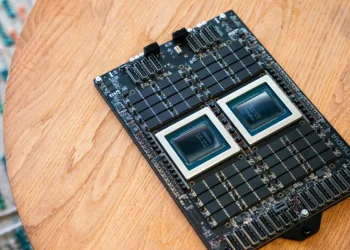
The price hikes don’t stop at graphics cards. NVIDIA also raised prices for its H200 and B200 chips and modules. These are key components in AI systems. As a result, server makers have increased prices by 10–15%, according to the report.
The NVIDIA price hike comes as the company prepares to announce earnings on May 28. The market is watching closely. Investors want to know how NVIDIA will handle the impact of tariffs and U.S. export restrictions, especially on its H20 chips.
Bloomberg previously reported that AMD expects a $1.5 billion annual revenue hit due to China export curbs. Investopedia estimates NVIDIA could lose $5–7 billion per quarter under similar conditions.
Raising prices now could soften the blow. But the question remains: will it be enough?
NVIDIA appears to be acting decisively. It is adjusting early to new trade realities and production costs. However, with policies still shifting, the long-term outcome is unclear.