Nvidia CEO Jensen Huang recently delivered a powerful statement about the future of artificial intelligence, claiming that many investors and tech enthusiasts fail to grasp just how vast the AI market has become. According to Huang, there are now over 1.5 million AI models in the world, spanning industries from healthcare to AI-driven platforms like Elon Musk’s Grok and Sam Altman’s ChatGPT.
In a fireside chat hosted by the Center for Strategic and International Studies (CSIS), Huang discussed the ongoing AI revolution, presenting it not as a singular breakthrough but as an infrastructure-scale transformation. He stressed that the true scale of AI encompasses multiple layers that go beyond the popular models many people are familiar with.
The Four Layers of AI Infrastructure
Huang broke down the AI revolution into four key layers. The first, he argued, is the most fundamental: energy. He pointed out that building the necessary energy infrastructure to power AI technologies is the core of the movement.
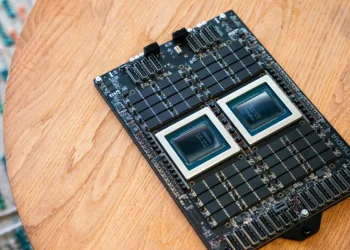
The second layer is Nvidia’s specialty: chips. Huang emphasized that without specialized chips to process the immense compute requirements for AI models, none of the technology could function effectively.
The third layer is financial services. Huang noted that the development of AI at scale is not only a technical challenge but a financial one, with substantial investments needed for data centers, networking, and long-term computing assets.
AI Models: Beyond ChatGPT and Grok
Finally, Huang turned to the AI models themselves, which have received the most public attention. While many people focus on generative AI models like ChatGPT, Claude, and Grok, Huang reframed the conversation. He revealed that these high-profile models represent only a tiny fraction of the global AI ecosystem, which boasts a staggering 1.5 million models in total.
This perspective shifts the focus away from just the most well-known models and highlights Nvidia’s role in the broader AI infrastructure landscape. Huang framed Nvidia not just as a tech company but as a critical enabler of the AI revolution, powering thousands of applications across industries worldwide.
Nvidia’s Key Role in the AI Revolution
With AI continuing to expand into every sector, Nvidia’s role as a provider of essential infrastructure—ranging from chips to financial systems—positions the company as a cornerstone of this transformative technology. Huang’s comments remind us that the AI revolution is not just about the models we hear about in the media but about a much larger, more complex ecosystem that’s changing industries across the globe.