Nvidia AI chips currently dominate the artificial intelligence landscape—so much so that calling Nvidia the “king” feels almost inevitable. Lions may reign over the savanna, Elvis still owns rock and roll, and Michael Jackson remains pop’s eternal monarch. But when it comes to chips powering AI, Nvidia has worn the crown with authority. Yet as 2026 approaches, that throne may face its most serious challenge yet.
AMD and Alphabet’s Google are emerging as formidable contenders, each pushing aggressive strategies that could reshape the AI chip market. So, should Nvidia worry? The answer isn’t simple—but context matters.
For starters, AMD has laid out an audacious roadmap. In November, the company announced plans to capture leadership in the $1 trillion AI and high-performance computing market. It targets a revenue compound annual growth rate (CAGR) exceeding 35% over the next three to five years—and more than 60% for its data center segment alone. This isn’t just bold talk; it’s already yielding results. OpenAI, the creator of ChatGPT, will integrate AMD’s next-gen Instinct MI450 GPUs into its AI infrastructure, with deployment slated for the second half of 2026. As part of the deal, OpenAI received warrants to buy up to 160 million AMD shares.
Moreover, Oracle is launching its first public AI supercluster powered by AMD’s GPUs and CPUs, set to go live in Q3 2026. Enterprise AI firm Cohere is also adopting AMD hardware. Additionally, the U.S. Department of Energy awarded AMD two major contracts to supply chips for its Lux and Discovery AI supercomputers. Altogether, these wins signal that AMD isn’t just competing—it’s executing.
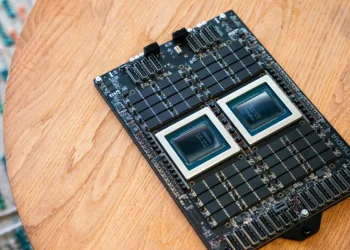
Meanwhile, Google is advancing its own vision through Tensor Processing Units (TPUs). Unlike general-purpose GPUs, TPUs are custom-built by Google specifically for AI workloads—and they’re gaining traction. Notably, Apple trained its Apple Intelligence AI system using Google’s TPUs instead of Nvidia’s chips. Google itself relies on TPUs to power its cutting-edge Gemini 3.0 large language model.
Even more telling, Anthropic—a leading AI lab—is investing tens of billions of dollars in 2026 to expand its AI compute capacity using Google TPUs, marking its largest TPU purchase to date. Meta Platforms is reportedly in talks to adopt Google’s TPUs in its data centers starting in 2027, a significant shift given Meta’s past reliance on Nvidia. With Google’s new Ironwood TPUs offering four times the performance of their predecessors, the momentum is real.
So, should Nvidia worry about its position in the AI chip race? Yes—but not with panic, rather with vigilance. The market is vast and growing, likely large enough for multiple leaders. Nvidia still commands unmatched software integration through its CUDA ecosystem, which remains the industry standard for AI development. Most major models—from Llama to Claude to proprietary enterprise systems—are optimized for Nvidia hardware.
In fact, Nvidia itself downplayed concerns in a recent post: “We’re delighted by Google’s success… NVIDIA is a generation ahead of the industry—it’s the only platform that runs every AI model and does it everywhere computing is done.”
That confidence isn’t unfounded. While AMD and Google are making impressive strides, Nvidia’s lead in both hardware performance and software infrastructure remains substantial. It’s also worth noting that Google still buys Nvidia GPUs for parts of its cloud infrastructure, and OpenAI continues to use Nvidia chips alongside AMD’s new offerings.
In conclusion, Nvidia AI chips are still firmly on the throne as 2026 begins. However, AMD and Google are no longer distant challengers—they’re credible crown princes with real momentum. The AI chip market isn’t a zero-sum game, but competition will only intensify. For now, Nvidia reigns. But in the fast-moving world of AI, even kings must keep one eye on the horizon.
READ: NVIDIA’s $35 Billion Investment to Revolutionize AI and Data Centers