Advanced Micro Devices (AMD) is gearing up to challenge Nvidia‘s dominance in the artificial intelligence (AI) chip market. AMD is offering an attractive alternative for startups and cloud giants with its MI300X chip and open-source ROCm software, positioning itself as a cost-effective and flexible option in the face of Nvidia’s dominance.
AMD’s Affordable MI300X Chip and ROCm Software
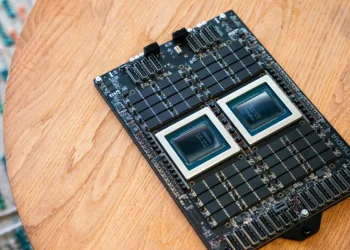
AMD’s MI300X chip offers 192GB of memory, which is double the capacity of Nvidia’s H100. The upcoming MI350X, priced at about $25,000, is a far more affordable option compared to Nvidia’s $40,000 H100 chip, making it ideal for startups and projects with limited budgets. For countries like India and UAE, where budget constraints are common, these chips are a practical solution for building large AI models without breaking the bank.
Moreover, ROCm—AMD’s open-source software—lets developers run AI anywhere, unlike Nvidia’s CUDA, which is locked into its hardware. This flexibility is gaining traction in the AI development community, especially in emerging markets. Microsoft has even integrated ROCm with its Azure cloud platform, further validating the potential of AMD’s approach.
Nvidia’s Struggles Amid Global Supply and Trade Bans
While Nvidia still holds a commanding lead in the market, it faces challenges with supply shortages and trade restrictions, especially in China. These issues have led some startups and AI innovators in India and the UAE to seek alternatives, opening a door for AMD to gain ground. AMD’s focus on U.S.-centric operations allows it to stay nimble, while Nvidia’s struggles with international politics limit its reach.
A Growing Opportunity for AMD
AMD’s MI300X chip and the ROCm software present a significant opportunity for AI innovators who need powerful and affordable solutions. The shift towards open-source AI tools and AMD’s strong pricing strategy could make it a serious competitor to Nvidia’s expensive and sometimes restrictive offerings.
Conclusion: A Competitive Alternative to Nvidia
AMD may not yet rival Nvidia’s established market dominance, but it has managed to carve a niche as an affordable and flexible alternative for AI development. With a more cost-effective hardware solution and the freedom provided by ROCm, AMD has positioned itself as an appealing choice for startups and countries that require scalable, secure, and customizable AI infrastructure.
As Nvidia grapples with export bans and supply chain difficulties, AMD’s open-source ROCm software and affordable chips could enable new players to challenge the status quo and contribute to the next AI revolution.