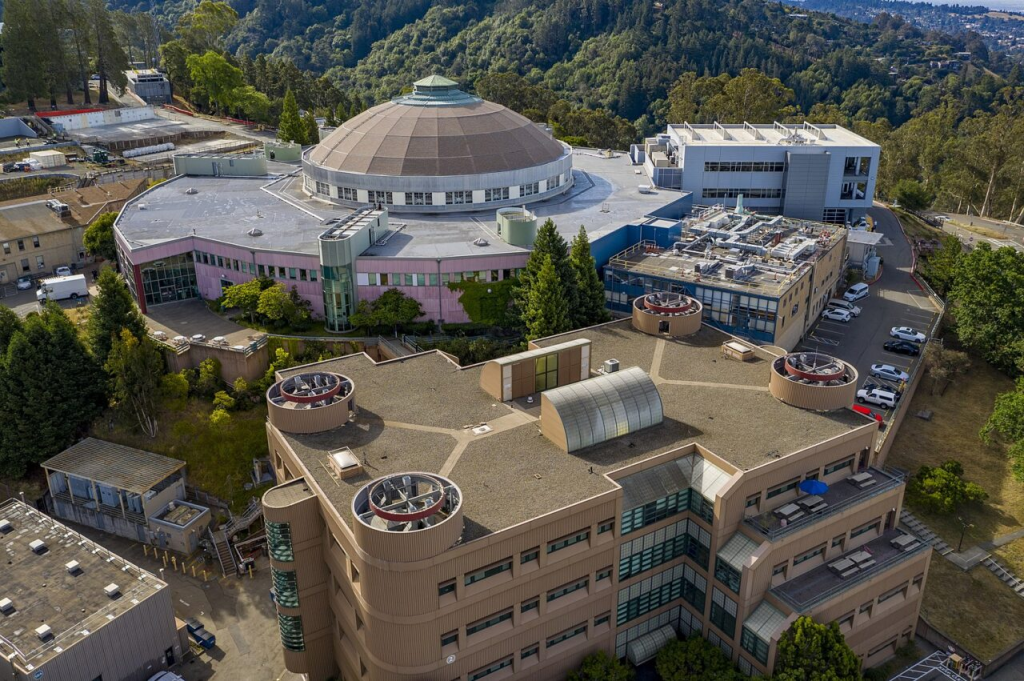
At the Lawrence Berkeley National Laboratory’s Advanced Light Source (ALS) in Berkeley, California, AI is playing a pivotal role in high-stakes physics experiments.AI Copilot Keeps Berkeley’s X-Ray Particle Accelerator on Track. The Accelerator Assistant, an AI-driven system, is designed to help manage and optimize operations at the ALS particle accelerator, drastically improving efficiency and reducing preparation time for complex experiments.
The Accelerator Assistant uses a large language model (LLM) powered by an NVIDIA H100 GPU and is integrated into existing workflows at the ALS. This AI agent can autonomously write Python code, solve problems, and assist with decision-making processes—either independently or with human oversight. The system taps into institutional knowledge from the ALS support team and interacts with popular LLMs like Gemini, Claude, and ChatGPT to improve the speed and accuracy of operations.
Enhancing Efficiency in High-Stakes Experiments
The ALS is home to one of the world’s most advanced particle accelerators, which sends electrons traveling near the speed of light in a 200-yard circular path, emitting X-ray and ultraviolet light. This light is directed through 40 beamlines, facilitating around 1,700 scientific experiments per year, covering a range of fields including materials science, biology, chemistry, physics, and environmental science.
However, maintaining the continuous operation of the accelerator is no small feat. The system has over 230,000 process variables, and any issue can lead to significant disruptions, affecting ongoing experiments. Until now, ALS operators have had to work quickly under pressure to identify problems, retrieve data, and assemble the right team to address issues.
How the Accelerator Assistant Works
The Accelerator Assistant is designed to bridge the gap between IT and operational technology (OT) in the ALS, acting as an AI coordinator between the two layers. This integration allows the AI to help monitor and manage operations, such as equipment status, task queues, staffing, and safety compliance. For example, when an issue arises, such as a slowdown in packing, the supervisor can query the system using natural language. The assistant analyzes the data, provides insights into the problem, and recommends actions to resolve it.
With the help of this AI system, ALS operators can quickly identify bottlenecks, improve task prioritization, and make data-driven decisions, reducing the need for emergency troubleshooting and providing a more predictable work environment.
AI-Powered Integration with Accelerator Systems
The system operates through a combination of on-premises and external AI tools. In the control room, inference is done on an NVIDIA H100 GPU node, allowing low-latency, secure processing of tasks. For external tools, requests are routed through the CBorg gateway, which connects to external LLMs like ChatGPT and Gemini, providing access to the latest AI technologies.
The Accelerator Assistant integrates seamlessly with existing control systems such as EPICS (Experimental Physics and Industrial Control System), ensuring that all actions comply with safety protocols and operational standards. This integration enables operators to interact with the accelerator’s hardware directly while benefiting from AI-driven insights.
AI’s Impact on the Future of Particle Accelerators
The use of AI in particle accelerators isn’t just about increasing efficiency—it’s also about enabling new scientific breakthroughs. The Accelerator Assistant allows engineers and researchers to automate and streamline complex experimental setups, cutting setup times by 100x. This has vast implications for the future of particle physics, where rapid adjustments and precise data analysis are crucial.
Additionally, the AI framework is being expanded beyond the ALS. It is part of the U.S. Department of Energy’s Genesys mission, which is deploying the system across various U.S. particle accelerator facilities. The team is also collaborating with the ITER fusion reactor in France and the Extremely Large Telescope in Chile, aiming to implement similar AI-driven solutions in these high-impact scientific environments.
Real-World Impact of ALS Research
Beyond optimizing accelerator operations, the ALS plays a significant role in advancing global science. The facility’s X-ray beams have been used in a variety of groundbreaking studies, including research on sustainable water harvesting and carbon capture, as well as helping to trace the chemical history of asteroid Bennu, which could provide insights into the origins of life on Earth.
In addition, ALS researchers have been instrumental in supporting the rapid development of therapeutic treatments, such as neutralizing antibodies for SARS-CoV-2, during the COVID-19 pandemic.
The Future of AI in High-Stakes Scientific Operations
Looking ahead, the use of AI at the ALS represents a shift towards more adaptive, autonomous operations in complex scientific infrastructures. With AI helping to automate processes, reduce manual effort, and improve decision-making, the potential for AI in high-stakes environments like particle accelerators, fusion reactors, and nuclear facilities is immense.
“The next step is embedding a physical AI layer into warehouse and store operations, enabling intelligent agents to see, reason, and act on real-world inventory and supply-chain challenges,” said Thorsten Hellert, lead author of the research paper. This evolution will further enhance the capabilities of AI in scientific research, providing a foundation for even more complex and transformative experiments in the future.