Nvidia Vera CPU is emerging as a major part of NVIDIA’s next growth strategy as the company looks beyond graphics processors and moves deeper into the fast-changing world of artificial intelligence infrastructure.
The reported sales push to Chinese customers comes at a critical time for the global chip industry. AI demand is rising, data centers are expanding and companies are racing to build systems powerful enough to support the next generation of agentic AI. These are AI systems designed to plan, act, coordinate tasks and complete complex workflows with less direct human input.
For years, NVIDIA has dominated the AI hardware market through its high-performance GPUs. These chips became essential to training and running many of the world’s most advanced AI models. But as AI systems become more complex, GPUs alone are no longer enough. Modern AI data centers need fast CPUs, advanced networking, stronger memory systems and efficient rack-scale architecture.
That shift explains why the Nvidia Vera CPU matters. It signals a broader move by NVIDIA to become a full AI infrastructure company, not just the leading supplier of AI accelerators.
Nvidia Vera CPU Shows NVIDIA’s Shift Beyond GPUs
NVIDIA’s rise has been built on the success of GPUs, which are highly effective at handling the parallel computing workloads used in machine learning. From large language models to generative AI services, its chips have become central to the AI boom.
However, the next phase of AI may require a more complete computing stack. Agentic AI systems need to handle more than model output. They often require task scheduling, memory coordination, tool use, data movement and real-time decision-making across complex workflows.
This is where CPUs remain essential. They help manage the system, coordinate resources and keep AI factories running efficiently. In large-scale deployments, the CPU is not just a supporting part. It can determine how smoothly the entire system performs.
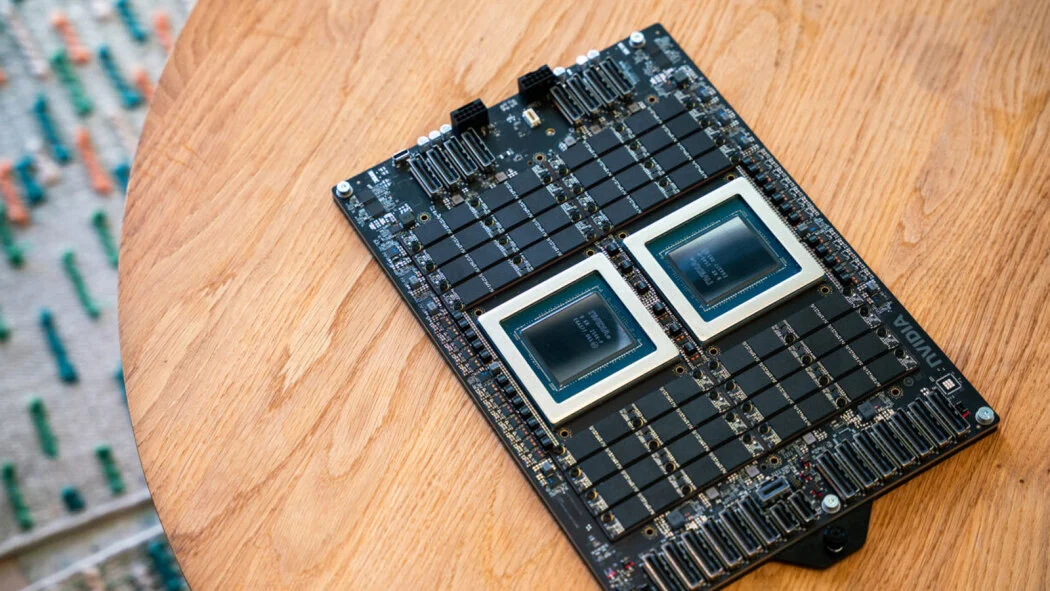
The Nvidia Vera CPU is designed for that role. Rather than competing only in traditional server computing, NVIDIA is positioning Vera as a processor built for the AI factory era.
Why Agentic AI Is Driving New Hardware Demand
Agentic AI is one of the biggest technology trends shaping the future of computing. Unlike basic chatbots or content-generation tools, agentic systems are designed to take steps toward a goal. They can plan tasks, use digital tools, interact with software, review results and adjust their actions.
That makes them useful for enterprise workflows, coding, customer service, research, automation and data analysis. But these abilities also require more computing power and better coordination across systems.
A single agentic AI task may involve many smaller actions. It may need to search data, call external tools, write code, check outputs and repeat steps until a goal is achieved. This increases demand on both CPUs and GPUs.
The Nvidia Vera CPU is being promoted at a time when companies are preparing for this heavier workload. If agentic AI becomes widely used, data centers may need far more efficient processors to manage the constant movement of data and instructions.
China Remains a Key Market for Nvidia Vera CPU
China is one of the world’s largest technology markets and a major centre for AI development. Its cloud providers, internet companies and enterprise technology groups continue to invest in AI research, data centers and advanced computing.
For NVIDIA, China remains important even as U.S. export controls have restricted sales of some advanced AI chips. Those restrictions have pushed the company to look for products that can serve customer demand while staying within regulatory limits.
The reported pitch for the Nvidia Vera CPU reflects that delicate balance. Chinese customers still need powerful infrastructure for AI workloads, while NVIDIA needs to protect its position in a market where domestic chipmakers are also gaining ground.
The strategy may not be simple. Customers must consider software compatibility, performance, deployment costs and regulatory uncertainty. But if Vera gains traction, it could help NVIDIA rebuild momentum in a market where GPU sales have faced heavy pressure.
Nvidia Vera CPU and the Data Center Race
The global data center race is accelerating. AI companies, cloud providers and governments are investing heavily in facilities that can support large-scale model training, inference and automation.
These data centers need more than raw chip power. They require efficient cooling, high-bandwidth networking, reliable memory systems and processors that can work together at scale.
The Nvidia Vera CPU fits into this wider infrastructure trend. It is part of NVIDIA’s effort to offer integrated systems for AI factories, where CPUs, GPUs, networking chips and software operate as one connected platform.
That approach could give NVIDIA an advantage. Customers building AI infrastructure may prefer a tightly connected ecosystem instead of assembling different parts from many suppliers. If NVIDIA can provide more of the stack, it may capture more value from each AI data center buildout.
Competition With AMD and Intel Intensifies
The move into CPUs also puts NVIDIA into more direct competition with AMD and Intel, two long-established players in the server processor market.
AMD has gained attention with its EPYC server chips, while Intel continues to defend its position in enterprise computing. Both companies are also working to capture more of the AI infrastructure opportunity.
NVIDIA’s advantage is its strong position in GPUs and AI software. Its challenge is proving that customers should also trust it in CPUs, especially in environments where AMD and Intel already have deep enterprise relationships.
The Nvidia Vera CPU therefore represents both an opportunity and a test. Success could expand NVIDIA’s market beyond accelerators. Failure would show how difficult it is to move into a sector with powerful existing competitors.
What Nvidia Vera CPU Means for Investors and the AI Industry
For investors, the Vera push reinforces NVIDIA’s ambition to remain central to AI growth. The company is not waiting for GPU demand alone to carry its future. It is building a wider platform around data centers, networking, CPUs and AI software.
For the broader industry, the message is clear. The AI hardware race is no longer only about the fastest GPU. It is about complete infrastructure for large-scale intelligence.
As agentic AI becomes more common, the demand for coordinated computing systems could rise sharply. Enterprises will need infrastructure that can support reasoning, automation and real-time workflow management at scale.
The Nvidia Vera CPU is part of that larger transition. It shows how the AI boom is reshaping the entire semiconductor industry, from chip design to cloud platforms and data center strategy.
NVIDIA’s reported China push also shows how global AI competition is becoming more complex. Technology demand, export rules, national security concerns and local chip development are now deeply connected.
The next phase of AI will depend on more than powerful models. It will require the infrastructure to run them efficiently, safely and at scale. That is why the Nvidia Vera CPU could become one of the most closely watched processors in the agentic AI era.