Nvidia vs Alphabet AI Stock is one of the most debated questions among investors looking to benefit from the artificial intelligence boom. Both companies play major roles in the AI ecosystem, but they operate in different segments of the market. Understanding how they generate AI revenue is essential before choosing which stock may offer better long-term value.
Nvidia dominates the hardware side of artificial intelligence. Alphabet, on the other hand, combines cloud infrastructure, custom chips, and advertising strength. The Nvidia vs Alphabet AI Stock debate ultimately comes down to exposure, risk, and diversification.
Nvidia vs Alphabet AI Stock: The Hardware Powerhouse
Nvidia has become the backbone of the AI revolution. Its graphics processing units, or GPUs, are widely used to train and run advanced AI models. These chips excel at parallel processing, which allows them to handle massive computational workloads efficiently.
While GPUs also power gaming, engineering simulations, cryptocurrency mining, and drug discovery, artificial intelligence now drives the majority of Nvidia’s revenue. This heavy exposure gives Nvidia direct leverage to AI spending growth.
However, that same concentration introduces risk. If enterprise AI investment slows over the next five years, Nvidia’s growth rate could moderate. Investors considering Nvidia vs Alphabet AI Stock must weigh this dependence carefully.
Alphabet’s TPU Strategy in the AI Race
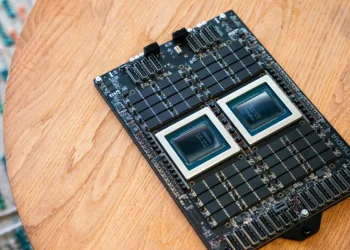
Alphabet approaches AI from a different angle. Through Google Cloud, the company offers Tensor Processing Units, or TPUs. These custom chips were developed over the past decade in partnership with Broadcom.
TPUs are specialized processors designed for specific AI workloads. Unlike Nvidia’s GPUs, which are highly versatile, TPUs focus on targeted tasks. This specialization can make them more efficient for certain AI applications.
However, access to TPUs is limited to Google Cloud. Clients who rely entirely on Alphabet’s hardware may face vendor lock-in concerns. As a result, many enterprises use a hybrid strategy, combining Nvidia GPUs with Alphabet TPUs. This dynamic means Alphabet remains both a customer and a competitor of Nvidia.
Diversification and Business Strength
The Nvidia vs Alphabet AI Stock decision also depends on business diversification. Nvidia’s growth is closely tied to AI infrastructure demand. Its valuation reflects expectations of sustained AI expansion.
Alphabet benefits from broader revenue streams. Advertising remains its largest source of income, while Google Cloud continues to grow rapidly. AI investments strengthen Alphabet’s ecosystem, but they do not define the company’s entire business model.
This diversification can provide stability during market volatility. If AI spending experiences temporary pullbacks, Alphabet still has other engines driving revenue.
Growth Outlook and Competitive Edge
Both companies are positioned to benefit from ongoing AI development. Nvidia maintains a technological lead in high-performance GPUs and continues to innovate with each new chip generation.
Alphabet, meanwhile, integrates AI into search, cloud services, and consumer products. Its ability to combine hardware, software, and data gives it a unique strategic advantage.
The Nvidia vs Alphabet AI Stock comparison ultimately reflects two investment styles. Nvidia offers concentrated exposure to AI infrastructure growth. Alphabet provides diversified exposure to AI through a broader technology platform.
Final Take for Investors
Artificial intelligence remains one of the most transformative trends in technology. Both Nvidia and Alphabet are central to that transformation. The stronger choice depends on investor goals.
Those seeking pure-play AI infrastructure exposure may prefer Nvidia. Investors who want AI growth alongside diversified tech revenue may lean toward Alphabet.
In the Nvidia vs Alphabet AI Stock debate, there is no universal winner. Instead, the better pick depends on risk tolerance, portfolio balance, and long-term confidence in the AI market’s expansion.